Portrait by Sam Falconer

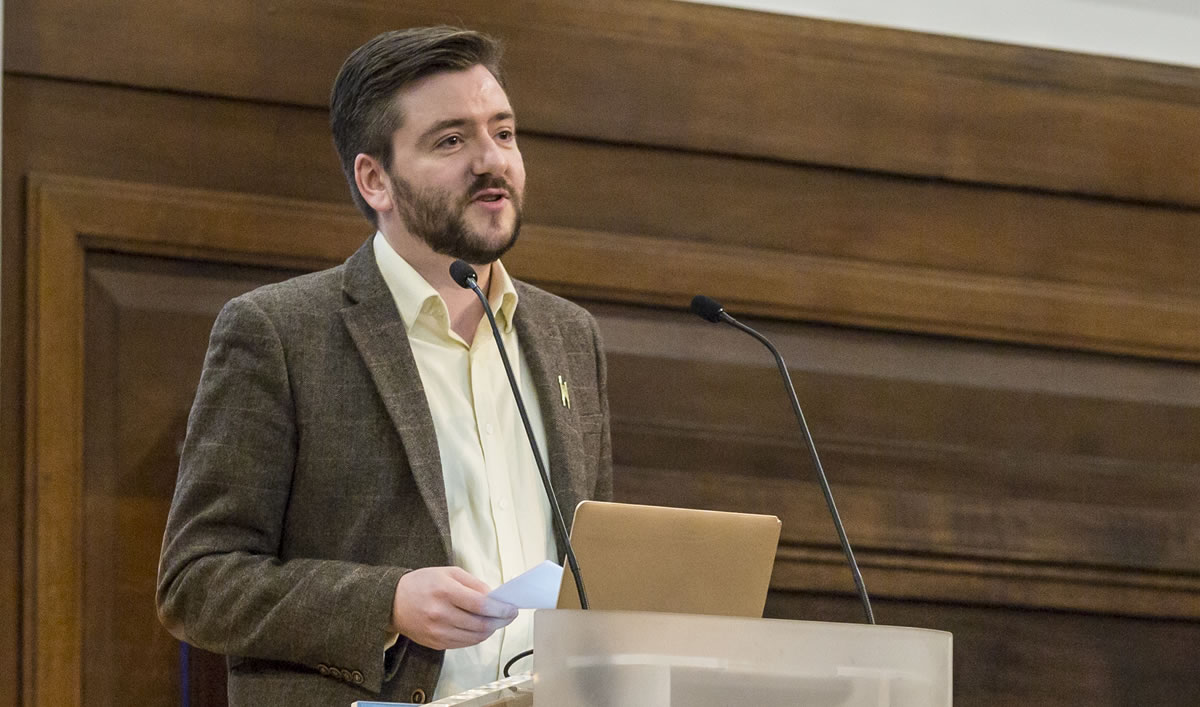
You may have seen some of the designs and illustrations of a talented man called Sam Falconer. if not take a look at his site at www.samfalconer.co.uk

Here is his portrait of me!

That’s his style, not any reflection on my actual nose, by the way. His portrait of Feynman has the same nose. And Brian Cox has a blue one.

The Big Questions on religion, education and children

The videos from Sunday’s The Big Questions are up on youtube.

There are two points made by the other side that I still can’t quite believe. Firstly, that the guy from Civitas compared the genital mutilation of babies with giving them a hair cut. Secondly, that the woman who wrote a book on chastity claimed that schools are teaching young people to have sex when they are ready to – and expected us all to agree that was a bad thing.

Evidence mounting against ‘faith schools’

The last few weeks have seen a lot of stories about state funded faith schools, based on new research and novel events. I hope that this will bring the general subject back to prominence, as it has been too much obscured by the controversy surrounding ‘free schools’ I have a Comment is Free piece on the subject today:

With all the controversy in the last year or two over the government’s free schools programme, the issue of state-funded faith schools has been somewhat eclipsed. This isn’t because their expansion has been at all reduced – if anything it has been accelerated – but public attention has shifted. Events of the past few weeks should reignite the debate, as a fuller picture emerges than ever before of just how our education system is manipulated, and the rights of children negatively affected by the ongoing, ramifying policy error that the existence of state-funded religious schools represents.

At the end of March, the Church of England published the Chadwick report. This ambitious report set out an aim to establish 200 more Anglican schools over the next five years. The report threatens church schools that will be more evangelical than in the past, and outlined as a “key premise that applies equally to children of the faith, of other faiths and of no faith” that schools would “work towards every child and young person having a life-enhancing encounter with the Christian faith and the person of Jesus Christ”. Michael Gove subsequently welcomed the report, saying that he would “extend the role of the church in the provision of schools”.

And where is the public accountability for this extension of involvement? Research published on Friday revealed that, over the past five years, when people were given a choice between a new faith school and another school opening in their area, they chose the other school a whopping 85% of the time. In spite of this, faith schools have continued to expand: almost two-thirds of state-maintained faith schools to open over this period have done so by the back door outside competition with other proposals. Never has the playing field been so uneven in favour of religious schools, nor with as little public scrutiny.

Nor has the pernicious effect of the discriminatory admissions policies ever been so clear. Guardian research in March showed that faith schools took fewer pupils requiring free school meals than other schools, their religious selection criteria constituting a de facto form of socio-economic selection. It all reinforces the arguments that where faith schools do get better results (and let’s not lose sight of the fact that often they don’t), this is mainly down to the admissions criteria. (Academic reputation is also really why parents “choose” these schools – only 9% of parents consider religion to be one of their three most important factors when picking a school.)

Preferential treatment at the stage of opening; permission to discriminate in admissions; the third main traditional concern over state-funded faith schools is in their legal right to teach a skewed curriculum. Aletter just last weekend, from a wide coalition of leading sexual health groups, unions and others, questioned why groups such as the Society for the Protection of Unborn Children have been allowed for so long to go into schools and spread falsehoods about abortion and contraception. More outrageous has been the news that the Catholic church promoted to all pupils in its secondary schools a petition against gay marriage in a way that is unacceptable for any publicly funded body and distressed many pupils. The Welsh government immediately announced it was investigating if the law had been broken and the Department for Education in London followed suit.

But, with the evidence mounting, the government should be investigating not just the incidents of the last fortnight, but also the whole principle of allowing such discrimination within our state education system at all.

I’m not a ‘None’

Andrew Brown at The Guardian has written an article about a seminar at which I spoke which was convened by academics (sociologists, political theorists, anthropologists, philosophers, and educationists) engaged in the emerging filed of studying the non-religious.

Andrew Copson, who runs the British Humanist Association, is a third generation post-Christian. “I grew up in a post-religious society in the Midlands. I went to an entirely secular primary school and secondary school; the popular culture I imbibed was things like Star Trek. I read fantasy and science fiction. I studied classics at university and some modern history.”

He was talking at a small conference on the study of non-religion and secularity last week. Sociologists and anthropologists have done a great deal of research on different forms of belief. But unbelief, or at least a life untouched in any serious sense by organised religion, is only just coming into scope for this kind of social scientific inquiry.

Copson had a varied intellectual and social experience when he was growing up, but he says: “What didn’t feature in any way in my account was religion. What’s not in any sense contributed to making me what I am is religion, and I think that story is increasingly typical of non-religious people.”

What I said in my opening remarks at the seminar was that I was the child of a humanist mother and non-religious grandparents, that the community institutions of the town where I grew up were municipal or secular cooperative ones, that the multi-ethnic primary school I went to was secular, that the academic secondary school I went to was the same, the the popular culture I imbibed was humanistic, that the academic subjects I studied by choice at school and at university were the culture of ancient Greece and Rome and Enlightenment Europe and that as a result of these combined factors, there was nothing at all of religion of any sort in the formative aspects of my upbringing.

(I think the whole conceit of ‘religion’ as a category is in any case tendentious. Whether it is being used to describe a worldview, a set of practices, or an identity, I think it is always a sub-category of some other larger category of thing.)

The point that I was trying to make was that this emerging discipline, as embodied in research networks like the NSRN or units like that just established at LSE field should not be too obsessed with defining humanist approaches to life by what they’re not. It is true that many non-religious people in the past were non-religious as a result of having rejected religion but today many are non-religious by default. I’m not non-religious in the sense that I was raised religious and turned against it. Religion has just been an unheard of irrelevance throughout my life. It is absent from my background, my worldview, my culture. I don’t want to tick ‘None’ to the ‘What is your religion?’ question on a form – I want to cross out the question.

Holy Redundant: getting the Bishops out

I’ve written before here about why we should get the special reserved places for Bishops out of our Parliament as part of Lords Reform. Today I’ve written a Huffington Post blog on the Bishops to launch the new BHA campaign Holy Redundant:

This week we learned that the parliamentary committee considering reform of the House of Lords voted 13-7 to support the government’s plan for automatic places for Bishops to remain in a reformed chamber.

They will be reduced in number from 26 to 12, but since the total number of appointed members of the chamber will also decrease, this will actually increase the proportion of Bishops relative to other appointed members. While they currently make up about 3% of the appointed House, they would make up anything between 12% and 17% of the appointed part of the reformed House.

Only 35% of the committee members voting opposed special reserved places for Bishops, with 65% of them in favour: proportions which are almost the diametric opposite of public opinion. 71% of public respondents to the 2002 consultation on Lords reform wanted Bishops removed; 60% of people in a YouGov survey this year wanted them out; an Ekklesia poll found that 74% of people opposed the automatic right of Anglican bishops to sit in the House of Lords, with only 21% thinking it right.

The total unrepresentativeness of the committee and the government’s position is the reason for the launch of the ‘Holy Redundant’ campaign today, which is encouraging the public to let their MPs know of their opposition to automatic places reserved for Bishops in our Parliament.

No sound arguments were given in the report of the committee as having been considered to lead to the conclusion that Bishops should remain. Boiled down, what argument that does appear seems to be that Bishops should stay because they want to and some people of other religions want them to stay as well.

The only explanation we’re left with is that the Church is a powerful vested interest, supported by powerful vested interests – just the kind you’d think that reform designed to make parliament more democratic and accountable might take on – but the kind that often triumphs, and has done so again. It is now up to those MPs and peers who do care about a fair reform of the Lords to take them in in the debates which the Bill will now proceed to have.

It is difficult to think of what arguments could possibly be made against the fair-minded parliamentarians to whom this cause now falls. The argument of tradition – that we should have Bishops because we have had them for a long time and it’s best to leave things as they are – is nonsensical at a time of reform. The argument that Bishops bring unique ethical expertise is insulting to all those peers and MPs who aren’t Anglican Bishops (whose ethical views may not even be that representative of Christians anyway when you consider that 70% of Christians support assisted dying for the terminally ill and 100% of Bishops in Parliament voted against it). The argument that removing them would amount to disestablishment of the church is rejected by legal experts.

More importantly, no argument that Bishops have a contribution to make to Parliament is a sufficient case for their having special reserved places in Parliament – why can’t take their places through open election or appointment like anyone else? A route into the national parliament of a free and open country which is available to individuals solely by virtue of their religion, their gender and their position in the hierarchy of one particular denomination of one particular Church is a unworthy route for a modern democracy in a plural society.

Curiosity

Looking forward to Robin Ince’s Voltaire Lecture for the British Humanist Association this evening on ‘The Importance of Being Interested’ – Natalie Haynes’ last year was brilliant.

I have no idea what he is going to say but curiosity is one of my favourite virtues and being interested in a characteristic we can all cultivate. It increases our pleasure in living through the joy of finding things out, it is a mark of an admirable intellectual exuberance and it helps us find ways to make the world a better place. It’s a classic humanist virtue so here are some classic humanist thoughts on curiosity, being interested and finding things out.

Blessed is he who learns how to engage in inquiry, with no impulse to harm his countrymen or pursue wrongful actions, but perceives the order of immortal nature, how it is structured.

Euripides, 400s BCE (via Charles Freeman)

I appeal to you to be rational, critical, inspired with the spirit of enquiry. Don’t take things simply for granted. If you do not have the courage to revolt against authority outright, then at least go to the extent of demanding on what sanction is the authority based. You shall never be able to be free on this earth so long as you remain a voluntary subject to forces unknown and unknowable.

M N Roy, 1963

Among [the qualities to be encouraged in children] the chief seem to me: curiosity, open-mindedness, belief that knowledge is possible though difficult, patience, industry, concentration and exactness. Of these, curiosity is fundamental; where it is strong and directed to the right objects, all the rest will follow.

Bertrand Russell, 1926


Morality, meaning, hopelessness

Just on the way back from speaking at an event organised by the humanist society at Hills Road Sixth Form College in Cambridge. Their student organiser was great and very keen but school and college audiences are always the most inscrutable. They sit expressionless throughout your talk (occasionally laughing: at your jokes if you are lucky) and you can’t tell until the questions which are the loyal adherents of Dawkins, the Pope, Sartre, or Buddha.

In the questions and afterwards I got the usual mixture of responses: interested and engaged questions on specific points from agnosticism to ‘spirituality’; the people who don’t ask questions but come up at the end to thank you for having said what they believe (and on this occasion a rather lovely ‘I understand better now why I believe what I believe’); the Christian with very fundamental beliefs who wants to tell you what you believe and demonstrate the total falsity of your position etc.

But whether it was because the audience at this college was particularly intelligent and engaged (they were) or whether I am just in a particularly thoughtful mood, today’s experience galvanised a few realisations that have been brewing in my mind through a number of public discussions over the years.

1. ‘Morality’

I am finding that there comes a point where discussions about morality become intractable not because of disagreement about particular values or convictions about what we should do but because of basic disagreements about what morality is.

I use the word to mean:

any organised attempt to reinforce our social impulses and on a individual level to mean the process through which we decide the right thing to do, a process in which we use our own sentiments as well as the theories, codes, principles and so on which our culture provides us with. I see morality as having its origin (but just its origin) in our biology and as relying on our shared human needs and desires for whatever universality it has.

Others – often religious but not always – use the word to mean

settled principles or rules, deriving from a source outside of humanity, adherence to which (or active engagement with which) constitutes correct behaviour. They see this as having an existence independently of human beings, as the moon or stars exist, and relying for its authority either on this objectivity or on the sanction given to it by a divinity.

Sometimes the incompatibility of these two stances makes further discussion of morality as morality impossible or at least unproductive. I think in future discussions I will make this point when the time comes and then go on to discuss the evidence for the two ‘origin of morality’ claims as the only way to move the issue forwards. I have evidence for what I believe from biology and anthropology as well as experience. What evidence is there for the alternative account of the origin of morality?

2. ‘Meaning’

The same problem applies to the idea of ‘meaning’ in life. When I talk about ‘meaning in life’ I am talking about

the sense of meaningfulness that human beings (individually and collectively) create in their lives through adopting worthwhile goals, through relationships with others, through aesthetic and emotional and sensory experiences.

Others – often religious but not always – use the word to refer to

some sort of ultimate and objective purpose that transcends not only the individual but all of humanity. This is meaning as an answer to the ‘What’s it all for?’ question.

I am reluctant to let the use of ‘meaning’ go but I think I will and will use ‘fulfilment or sense of purpose in life’ in the future to keep things explicitly human and earthly avoid confusion with the claim there is objective or ultimate meaning to the universe.

3. There really are non-religious people who believe only religion provides a secure foundation for values and meaning

It is almost always only in student groups that I encounter this, but there is a sort of theoretical nihilism felt by some non-religious people, for whom muddling through and dealing with life as it is, accepting that morality is a prudential endeavour relying on our shared human needs and accepting that there is no objective purpose to reality, only the meanings that we make for ourselves is not enough.

I think this is very much a minority position among thoughtful people and I also think it is theoretical and has little effect on the actions in practice of even those who believe it in theory. But it reminds me of three things:

The first is a concise quote from J S Mill that sums up this position nicely and shows how little things changes over the decades:

Many, having observed in others or experienced in themselves elevated feelings which they imagine incapable of emanating from any source other than religion, have an honest aversion to anything tending – as they think – to dry up the fountain of such feelings.

The second is the quote by humanist philosopher Brendan Larvor that Humanism is ‘the joint denial of theism and nihilism’ and how important both parts of that are.

The third is the second part of the ‘vision’ statement of the British Humanist Association, which is that we want ‘non-religious people to be confident in living ethical and fulfilling lives on the basis of reason and humanity’ and how important that aim of ours is – even if it doesn’t appear as important to those of us who are already pretty confident (as our members tend to be!)

Cardinal Keith O’Brien’s “cross” remarks

Was on the BBC a couple of days ago discussing Cardinal O’Brien’s comments about wearing crosses in public.


PM Doing God

The paper City AM is running a debate in their pages this morning on whether Government should ‘do God’ following on from the Prime Minister’s weird ‘Easter message’ yesterday. Here is my contribution:

Britain is a diverse country where, according to the last major British Social Attitudes Survey, 51% of us describe ourselves as having no religion. 87% of people don’t go to a place of worship on the average week and, although practising religious people of any religion are a minority, we have citizens of an enormous number of religions from Animists to Zoroastrians.

In this context, governments should not ‘do God’ (which God would they do?) any more than they should ‘do atheism’. The role of government in a society that is so diverse is not to privilege and highlight only one religion but to create a space for people of all different beliefs to live together in tolerance. When a Prime Minister talks about ‘we Christians’ he puts that inclusiveness in jeopardy and excludes and alienates many of us from the government of our country.

Although the content of his message was actually pretty anodyne, the fact that the Prime Minster is producing a statement like this at all is extremely worrying. That he is welcoming a ‘fightback’ of Christians against the law is deplorable. Together with his ‘we are a Christian country‘ remarks of last year, it represents another step towards the cultivation of a British religious right.

Getting the Bishops out

I’ve just come back from a series of local BBC radio interviews on the place of Bishops in House of Lords reform. This is following the disappointing news that the parliamentary Joint Committee on Lords Reform is to recommend Bishops remain in a reformed chamber. I gave oral evidence to the committee last year but obviously they liked Rowan Williams’ evidence more :-(

I can’t think of a single good argument for automatic places for bishops remaining in a reformed chamber. We don’t know what the committee (one of the members of which is himself a bishop) will give as the rationale for its poor decision but it’s bound to be one or more of the following fatuities (all of them were made by the Bishop of Hereford at some point this morning):

‘Bishops have been in our parliament for centuries’

At a time of reform especially – but at any time really – this is a particularly bad argument. When we are rethinking our situation in the light of the contemporary context, the fact that bishops have been in parliament for centuries is no argument at all. Although they still get quite nice houses, they are not the feudal landowners of bygone days and the old justifications are redundant.

‘This is a Christian country’

No it isn’t – most people aren’t Christians in any religious sense. The last British Social Attitudes Survey showed 51% of people said they were not religious, over 90% of people are not regular church attenders and in addition there are many non-Christian religious citizens of the UK. Much influential pre-Christian, non-Christian and post-Christian thought has shaped our country over the centuries. And even if we were a Christian country why would that mean we should have reserved places for Bishops in our parliament. Let alone those of one particular church which is not even the biggest church in this country? The Anglican Church has just over 1.5 million members in the UK and its Sunday services are attended regularly by only about 1.9% of the adult population. If we were going to have any church represented in our parliament it would be the Catholic church, which is bigger.

In any case, the views of the Bishops may in fact be rejected by a clear majority of Christians – even by a majority of those who define themselves as Protestants. All Bishops voted against the Assisted Dying for the Terminally Ill Bill, but polls show that 81% of protestants ‘think that a person who is suffering unbearably from a terminal illness should be allowed by law to receive medical help to die, if that is what they want’.

‘There are Christians in Britain so there should be Christians in Parliament’

Er, there are Christians in Parliament – there are elected MPs who are Christian, there are appointed peers who are Christian: plenty of them.

‘We need to have an ethical voice in our parliament’

People from many professions and from many philosophical and religious backgrounds are just as qualified if not more so, from moral philosophers to medical ethicists. And even if we agreed that Bishops may have something useful to contribute – why can’t they be appointed to the same system as everyone else? That appointment system has led to people who happen to be rabbis being appointed – why can’t Bishops be treated equally as part of that process rather than having automatic places as of right?

‘The Church of England is the country’s largest NGO, doing a lot of good works’

So what? Lots of people do good works and lots of organisations have mass memberships and broad social penetration, from cooperatives, to trade unions, to big national charities. They don’t get automatic seats in parliament though. Why should one special interest group get them but not others?


Terrible arguments.