Responding to the Heathen Manifesto

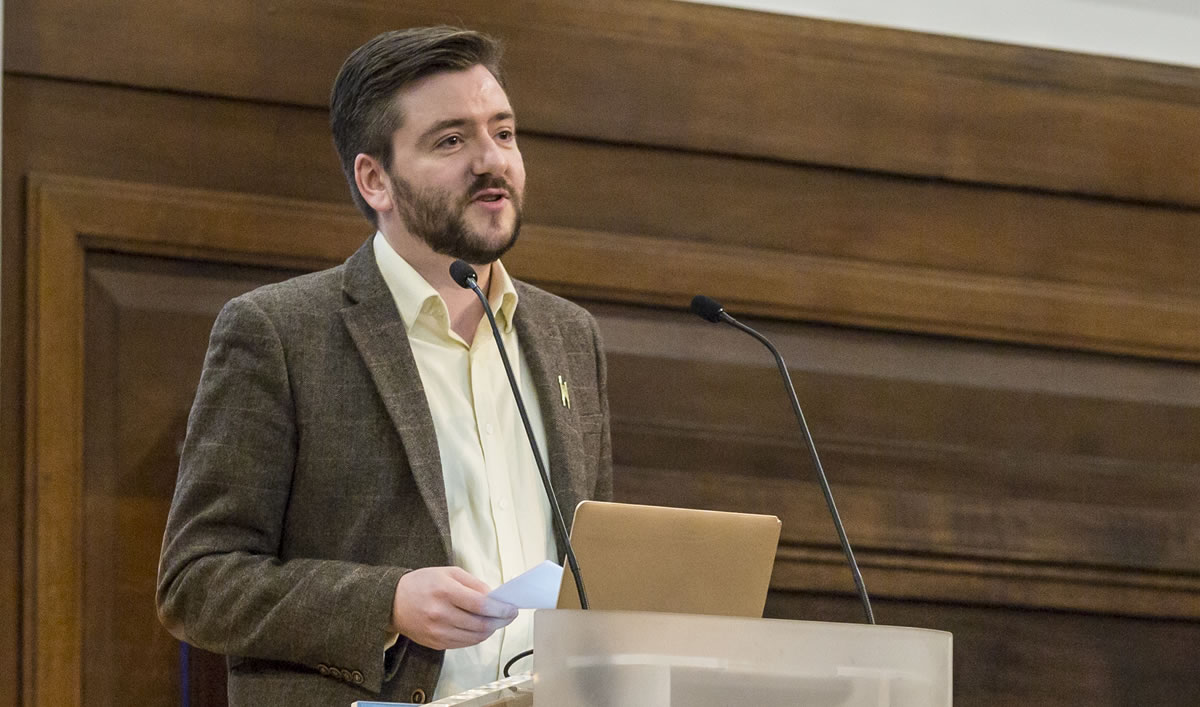
Today Julian Baggini has his Heathen’s Manifesto published in The Guardian. I was part of a panel discussing it with him, the former Bishop of Oxford, and director of Theos Elizabeth Hunter at The Guardian Open Weekend on Saturday.

This is basically what I said then:

I don’t disagree with much of the detail of the approach that Julian has set out and where I do disagree it is just around the edges. What I object to and don’t understand the necessity of is the re-branding.

1. It is unnecessary

If I were to go through the manifesto and replace ‘Heathen’ with ‘Humanist’, almost none of the statements Julian makes would be affected. So I wonder why we actually need a new word at all. In his article Julian implies that, because there are humanist organisations, the very concept of humanism is separately owned and not available for use. But that’s not true – humanist organisations promote humanism, they don’t own it, and the definitions of humanism that we can find in dictionaries and encyclopedias make it clear that the word covers most if not all of what Julian wants to express with ‘Heathen’:

a morally concerned style of intellectual atheism openly avowed by only a small minority of individuals (for example, those who are members of the British Humanist Association) but tacitly accepted by a wide spectrum of educated people in all parts of the Western world: Oxford Companion to the Mind

The rejection of religion in favour of the advancement of humanity by its own efforts: Collins Concise Dictionary

a non-religious philosophy, based on liberal human values: Little Oxford Dictionary

an appeal to reason in contrast to revelation or religious authority as a means of finding out about the natural world and destiny of man, and also giving a grounding for morality…Humanist ethics is also distinguished by placing  the end of moral action in the welfare of humanity rather than in fulfilling the will of God: Oxford Companion to Philosophy

a commitment to the perspective, interests and centrality of human persons; a belief in reason and autonomy as foundational aspects of human existence: Concise Routledge Encyclopedia of Philosophy

Devotion to human interests; system concerned with human (not divine or supernatural) matters, or with the human race (not the individual), or with man as a responsible and progressive being… emphasising the importance  of common human needs and abstention from profitless theorizingConcise Oxford Dictionary

Believing that it is possible to live confidently without metaphysical or religious certainly and that all opinions are open to revision and correction, humanists see human flourishing as dependent on open communication, discussion, criticism and unforced consensus: Cambridge Dictionary of Philosophy

I don’t think that Humanism is a damaged brand or a tarnished concept. It is an approach to life that picks up where atheism leaves off and meets the needs Julian is trying to meet.

2. It is undesirable

It may seem strange for the Chief Executive of a humanist association – an organisation focused around a label for a certain approach to life – to say this, but I don’t think that labels are all that desirable.

Of course it is necessary for concepts to have names, and that includes worldviews and approaches to life. There is also a sense in which naming your approach to life is an aid to confidence and personal development. An anthropologist who was studying the BHA last year found again and again that the moment when those he interviewed had discovered there was a word for what they had believed all their lives was a significant moment for them and it mattered in their own internal narratives of their lives.

But something that should be clear from the definitions of humanism above is that humanism itself is not really an ‘-ism’ in the sense of a prescriptive identity or affiliation. It is more of a post-hoc descriptive word for an attitude that already exists, desirable only because things must have names to be properly articulated and discussed.

A deliberate proliferation of labels and identities, especially when accompanied by manifestoes laying out point by point the contents of an approach to life strike the wrong note for me.

3. It is counter-productive

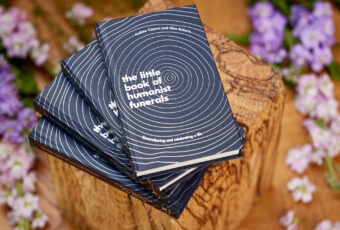
In spite of what I’ve said about not making a fetish for labels, there is a case for the organisation of people who share a particular approach to life. This is not just for the emotional support of solidarity but so that people with shared views can take joint action on matters of mutual concern (campaigning against state-funded faith schools, for example) and provide for others who share their views (by helping to train non-religious funeral celebrants, for example). In this context, a flowering of distinctions and a proliferation of new and redundant terms is unhelpful and the beguiling vanity of small differences should be resisted.

So, I hope that you will read the Heathen’s Manifesto, agree with most of the substance of it, but not end up making Heathen button badges for yourself and all your atheist friends. Instead, why not join the British Humanist Association!

Joy is People

Last week The Guardian sent me to see ‘Joy is People’ – the Jeremy Deller retrospective at the Hayward Gallery. It was for the excellent ‘Another View’ column by Laura Barnett?

It was published in the paper today and is here and below.

I don’t know if Jeremy Deller is a humanist, but his fascinating exhibition has a lot to link it with the movement. Its title Joy in People, taken from a banner on a 2011 political demonstration, neatly sums up one of our core values: humanity’s positive potential. It would make a great slogan for the British Humanist Association.

I know of several artists who are humanists: Anish Kapoor, for example, is a BHA member. But then there is a link between the principles of humanism and the creative process. As humanists, we encourage people to find their own meaning through connections with others, and through their own imaginations. Any artist whose work questions who we are, and our relationship with each other, is doing the same thing.

Most of Deller’s work is marked by optimism: not in a blind, everything-is-wonderful sense, but in his ability to look for art in places where people assume it couldn’t be found. Again, that connects him with humanism. One of the most interesting examples would be The Uses of Literacy, in which Deller asked fans of the Manic Street Preachers to make paintings, collages or drawings expressing their love for the band. He also seems to have a strong connection with working-class culture: in his 2001 film The Battle of Orgreave, he reconstructed the famous miners’ strike of 1984. I can see another link with humanism here: our history is firmly rooted in working-class cooperative movements, which became secular alternatives to churches.

Deller is a facilitator, a curator, more than an artist in the traditional sense. Some of his works feel a bit out of place in a gallery – like the meticulous reconstruction of Valerie’s, a snack bar in Bury. But it becomes a place for exhibition visitors to meet: you can sit down, have a cup of tea, and get chatting to strangers. It’s another way for Deller to make his point about the interconnectedness of people. Even as he does this, however, he is never didactic – and neither, as humanists, are we. Like Deller, we invite people to make their own interpretations of life, rather than telling them what it means.

Paper review on BBC London yesterday

Gay marriage was the main topic in the newspaper review I  did yesterday on BBC London 94.9FM with Jumoke Fashola, religion and ethics presenter and jazz singer extraordinaire. You can listen below (fast forward through the jokes about my beard).

AndrewPaperReview2012-03-11

Some facts for Cardinal Keith O’Brien

I nominated Cardinal Keith O’Brien for the New Humanist Bad Faith award back in 2008. He didn’t win but I think if I nominated him again he would be in with a much better chance.

On his intervention in the gay marriage debate, it’s not just that his opinion is inhumane and hateful, it is based on two claims which are totally unsupported by the facts. Maybe this shouldn’t be too much of a surprise but I think it is worth pointing out.

1. He says his definition of marriage is the ‘universally understood’ one

By this he presumably means that there is a total consensus that marriage is between one man and one woman and plans to legislate for gay marriage contravene this. But this understanding is not ‘universal’:

a. Institutions of marriage that have joined two people of the same sex have existed in the ancient and modern world and in every continent.

b. In Europe, Belgium, Iceland, the Netherlands, Norway. Portugal, Spain and Sweden all have same-sex marriage. So do Argentina, Canada, South Africa, and parts of Brazil, Mexico and the USA.

c. Opinion polls in the UK in 2004, 2008 and 2009 found that a majority of people – as high as 61% – supported gay marriage.

So his understanding is not ‘universal’ – in fact it’s a minority position in the UK at least and there are plenty of people globally who also disagree with him.

2. He says governments don’t have the ‘moral authority’ to define marriage

He then goes on to define marriage himself, implying that his church does have the moral authority but:

a. Human beings have been pairing up and committing to each other for millennia before his church was a twinkle in St Paul’s eye.

b. The institution of marriage pre-dates Christianity and the definition of marriage in law has mostly been established by civil, not religious authorities – i.e. governments

c. Since 1992, most marriages in England and Wales have not been religious. In 2009 67% of marriages in England and Wales were not religious.

d. In 2010, in the Cardinal’s own Scotland, the number of humanist marriages exceeded the number of Catholic marriages by about 20% and the number of non-religious marriages overall was more than twice the number of religious marriages.

So the church has no claim on the definition of marriage (apart from the definition of marriage they choose to use in their own rituals of course, which no one is proposing to interfere with).


The Cardinal would be more honest if he just said that he doesn’t like gay marriages because his religion tells him so, and he doesn’t think people should be allowed to have them because he doesn’t think people should be allowed to have things his religion doesn’t like.

But then I suppose even fewer people would listen to him.


Humanist views on education

A couple of days ago Andrew Brown over at The Guardian said to me that a lot of humanist concerns with education seemed negative – opposing religious schools, opposing this and that – and could I write something for him that laid out some positive humanist thoughts about education in 600 words. Coincidentally, I’d just talked the day before about the consequences of humanism in educational thought at the University of Sussex Humanist Society so I said yes.

The article is in the print Guardian today on p.43. and you can read it on the Guardian website or here:

Against faith schools, against worship in schools, against confessional RE in schools – sometimes humanist views on education are portrayed in entirely negative terms. In fact, any humanist taking action on these issues is doing so for positive reasons, being in favour of integrated schools without discrimination, inclusive assemblies that bring a school together, and objective, fair and balanced education about beliefs. But more than that, humanists have originated powerful educational thinking of their own down the centuries.

One of the most prominent contributions has been in moral education. Seeing morality not as a set of rules derived from a transcendent deity but as an organised attempt to reinforce human social impulses in the here and now has a clear effect on how you seek to develop morality in children.

Sixty years ago the humanist educational psychologist Margaret Knight caused a national moral panic when she suggested on the BBC that moral education could usefully be uncoupled from religious education. She said moral training should be an independent effort, not just involving the passing on of principles and ways of thinking but having an emotional basis too. “Warm-hearted and generous natures are developed not primarily by training and discipline, important though these are in other ways, but by love,” she said. Today, not least because of humanist educators like Harold Blackham (who founded the still-running Journal of Moral Education) and James Hemming, these ideas are near to mainstream.

Development of reason and scientific and critical thinking is another concern of humanists in education. “The humanist is a rationalist, one who puts reason first … stresses the open mind, dedication to a disinterested search for truth,” said Blackham. Beyond the search for truth that motivates in a subject like science, humanists in education have prioritised the development of critical thinking and a rational spirit for its social consequences in the formation of democratic citizens. This was a lifelong concern for the humanist political thinker Bernard Crick, responsible for the introduction of citizenship education. In case this still seems too coldly utilitarian, we have the humanist idea that the ability to reason and inquire freely is personally fulfilling too: “I appeal to you to be rational, critical, inspired with the spirit of enquiry … You shall never be free on this earth so long as you remain a voluntary subject to forces unknown and unknowable,” said the Indian humanist MN Roy.

If you believe death is the end of our personal existence, the individual cannot achieve their full flourishing in some world to come. So personal fulfilment, if achieved at all, can only be achieved in this life. Education on this view kickstarts this lifelong journey of personal development, and the study of art, literature, philosophy, religions, science, history and so on is not just a process of acquiring knowledge but of making a life for oneself that is meaningful and fulfilling. This is a third area when humanist views have an enormous impact on educational thinking.

It’s unlikely there would ever be a “humanist school” as there are religious schools – if humanist organisations ever did run schools they would surely be secular ones, run along inclusive lines and encouraging open-minded autonomy among pupils. But humanist thinking on education can help teachers, parents and others to reflect on how our values shape this most important endeavour.

Religious and non-religious beliefs in schools

A new All Party Parliamentary Group is going to be forming soon to improve the subject of ‘Religious Education’ with ones of its aims as ensuring ‘every young person experiences a personally inspiring and academically rigorous education in religious and non-religious worldviews.’

Some people are surprised that humanists have such a long involvement in the subject of ‘Religious Education’ in England and Wales but the fact is that they have been involved for many decades working to make the subject more balanced, fair and objective and to ensure that it includes education not just about religious beliefs but about non-religious ones too.

Reasons to support education about religious and non-religious beliefs in schools:

1. Religions and other philosophies and worldviews are an important part of the heritage and culture of humanity and education about them, from the Ancient Greek pantheon to Islam to Confucianism to Humanism, is consequently an important part of a Humanities education.

2. At least a basic knowledge of our fellow citizens’ beliefs is useful for good citizenship because it can help to generate mutual understanding which, other than in schools, may not develop (so, a child of Christian parents can learn about where non-religious people get their values from; a child of humanist parents can learn why their Sikh neighbour wears a turban etc)

3. Learning about the range of different beliefs is a way of ensuring children get their entitlement to learning about a broad range of human views and is a good counter to indoctrination that might occur in the home. One of my friends who is a teacher had a pupil from a very religious background who said to her that the trouble with RE was that it was interesting but made you question things you weren’t really supposed to question. Bingo!

Unfortunately, the subject needs much improvement, as the latest Ofsted report pointed out, and RE remains the subject most taught by non-expert teachers. There are also laws which exempt state-funded religious schools from the general requirement to teach a broader syllabus and allow them to teach a confessional one. It seems unlikely that these problems will be addressed under the current government but maybe in the longer term.

Coincidentally with the news of the new Parliamentary Group, an education researcher called John Tillson has been posting videos of interviews about RE he did with various people a few years ago. It was so long ago I can’t actually remember doing it but here is one with me:

Final thoughts on our Christian country: why did they say it?

Here is the video of The Big Questions yesterday where Richard Dawkins, Jonathan Bartley and I defended secularism and argued this is not a Christian country. Here also is a video from earlier last week with me and Anne Atkins discussing the same issues on the BBC.

Looking back on the week I think there is one really important unanswered question: why have politicians from Secretary of State for Communities and Local Government Eric Pickles to Baroness Warsi to the Prime Minister seen it as important and legitimate policy to declare that Britain is a Christian country and secularism is illiberal and intolerant?

I can think of three possibilities but welcome suggestions of any others:

1 It is an attempt to develop a Christian right that will be a future security for the Conservative party as the religious right is in the US. There are already Christian lobby groups in the UK which behave like those in the US and advance the same range of concerns (anti-choice, against assisted dying for terminally ill people, against comprehensive sex and relationship education for young people etc) which have been working with individual Conservative politicians.

2 They think that this message plays well to their already existing support base. (I know that, when we were last recruiting Conservative members of the All Party Parliamentary Humanist Group, many potential members were concerned that their own local parties would not like them to join, so certainly the perception that such bases are Christian by inclination if not by religion is strong).

3 They really believe it. They just can’t understand that most people in the UK don’t rely on religion generally or Christianity in particular for their values and do just fine. So, when they are searching for some unifying values to promote, in response to what they see as a values deficit in society, they can only resort to Christianity. I think this is the scariest interpretation as it means they really mean what they say rather than it just being tactical, and the threat of actual public policies based on their false beliefs is much greater.

Any other interpretations?

What does Baroness Warsi mean?

This Valentine’s Day has started badly with a love letter from Baroness Warsi to Christianity and the Pope, both of which she really loves. The Telegraph, Independent and Guardian are all reporting it.

She’s said it all before, of course, but she has chosen a bad day to say it today: the same day that research published by IpsosMori shows that most self-described Christians disagree with her.

She never gives any solid and real examples of what this ‘militant secularisation’ is that she is talking about. She never defines her terms, so we don’t even really know what she means by ‘religion in the public sphere’ and the one time I saw her defending her positions on religion on Newsnight, it became clear that she was actually quite ignorant of the detail of most of the policy areas in which religion intersects with government in practice.

Are there any actual specific policies that she is recommending to support ‘faith’? She has basically made this same speech five or six times now, and written on the same theme in The Telegraph repeatedly, but I still don’t quite know what she actually wants.


“Census Christians”: pro-gay, pro-choice secularists

Today’s second lot of data from IpsosMori, commissioned by the Richard Dawkins Foundation, looks at the social and political attitudes of people who tick ‘Christian’ in the census.

I’ve often been in debate, on panels, TV, radio or elsewhere, with those (Bishops, people from Christian lobby groups, Christian politicians) claiming to speak for that 70% of census Christians so it’s always interesting to find out what those self-defining ‘Christians’ actually think about the social and political issues on which religious leaders pontificate.

When we do find out, we often see a huge disconnect between their views and the views of those who claim to speak for them. A good example is assisted dying: polls from 2010 and earlier show over 70% of self-described Christians in favour of legalised assisted dying, but not a single Bishop in Parliament voted in favour of it.

Of course, most who ticked the Christian census box meant nothing religious at all by this self-identification (see my previous post) so in a sense we can’t complain that religious leaders and lobbyists are not representing their views accurately. Bishops et al could claim that they are really speaking for their actual believers, a much much much smaller crowd.

That’s fair enough but what they can’t do is have it both ways: either they are speaking for a small minority of actual committed believers or they can try to speak for the 70%, as they often claim they are doing, in which case they should take the trouble to find out what that 70% actually believes.

Among the things they are revealed as believing in today’s research are that gay people should have the same legal rights in all aspects of their lives as straight people (61%), women should have the right to abortion within the current time limit (62%), the law should apply to everyone equally, regardless of religion (92%) and religion should not have a special influence on public policy (73%).

Bad news for those who claim the support of the 70% in their campaigns to exemptions from equality laws, reductions in the abortion time limit, Bishops in the House of Lords, confessional education in state funded schools, keeping marriage for a man and a woman only, and generally giving religion a privileged place in public life.

There’s a lesson for politicians too: 78% of census Christians say Christianity has no, or not very much, influence on how they vote in General Elections. If they knew this, perhaps successive governments would have greater courage in standing up to powerful church lobbies in particular and pursuing policies that would give effect to the social and political morality of the fair-minded humane mainstream in Britain of which many census ‘Christians’ are a part.


(PS I believe that even many real believing religious Christians don’t support the policies of the lobbyists either. The vast majority – though obviously not all – not just of my Christian friends today but of all the Christians I have known have been more liberal, tolerant, humane and fair-minded than many of the institutions and organisations that claim to speak for them – I’d be interested to see more data on this.)

Not believing, not belonging: “census Christians”

‘Believing without belonging’ has been the slogan of those who say that, although actual church attendance has fallen to negligible proportions on the average week and very few people are in membership of any church, people do still believe.

This was an argument whose advocates were driven almost delirious with joy when the results of the 2001 census were published and it was revealed that over 70% of those answering had ticked the ‘Christian’ box.

Although good serious demographers like David Voas and Alasdair Crockett have strongly rebutted the ‘believing without belonging’ thesis (e.g. here) and academics like Abby Day have demonstrated that many of those who ticked ‘Christian’ in the census were not in any sense believers, still the same argument rattles on regardless.

As part of our Census Campaign last year, the BHA commissioned research by YouGov to find out a bit more about census Christians. We discovered – of course – that only 6% of census Christians had attended a church in the last week but we also discovered that 65% of them also said they were not religious and only 48% of them even believed Jesus was a real person who was the son of god, died and came back to life. It seemed to pretty much explode the claims that all or most of those ticking ‘Christian’ in the census were religiously ‘Christian’ in any meaningful or significant sense.

Today, IpsosMori is releasing research commissioned by the Richard Dawkins Foundation, which was carried out a week after the BHA poll, once the 2011 census had already been taken, and the findings go even further in exposing how meaningless the “70% Christian” line really is.

Amongst other things, it shows that only 10% of census Christians say they seek most guidance on questions of right and wrong from religious teachings or beliefs and over 60% of them haven’t read the Bible in the last year. Only 28% say that it is a belief in the teachings of Christianity that makes them tick the Christian box.

It just underlines what any sensible person knows and any rational person has accepted from the weight of research done since the 2001 census – not only are the majority of people in the UK not religious at all, but even most self-identifying ‘Christians’ mean by that only a vague inherited cultural self description: nothing religious.

The way that the census data was abused following its release ten years ago has done great damage to a proper understanding of the belief demography of the UK, but at least it has also helped contribute to the building of an evidence base that should make that same sort of abuse of the 2011 data impossible.

Hopefully!